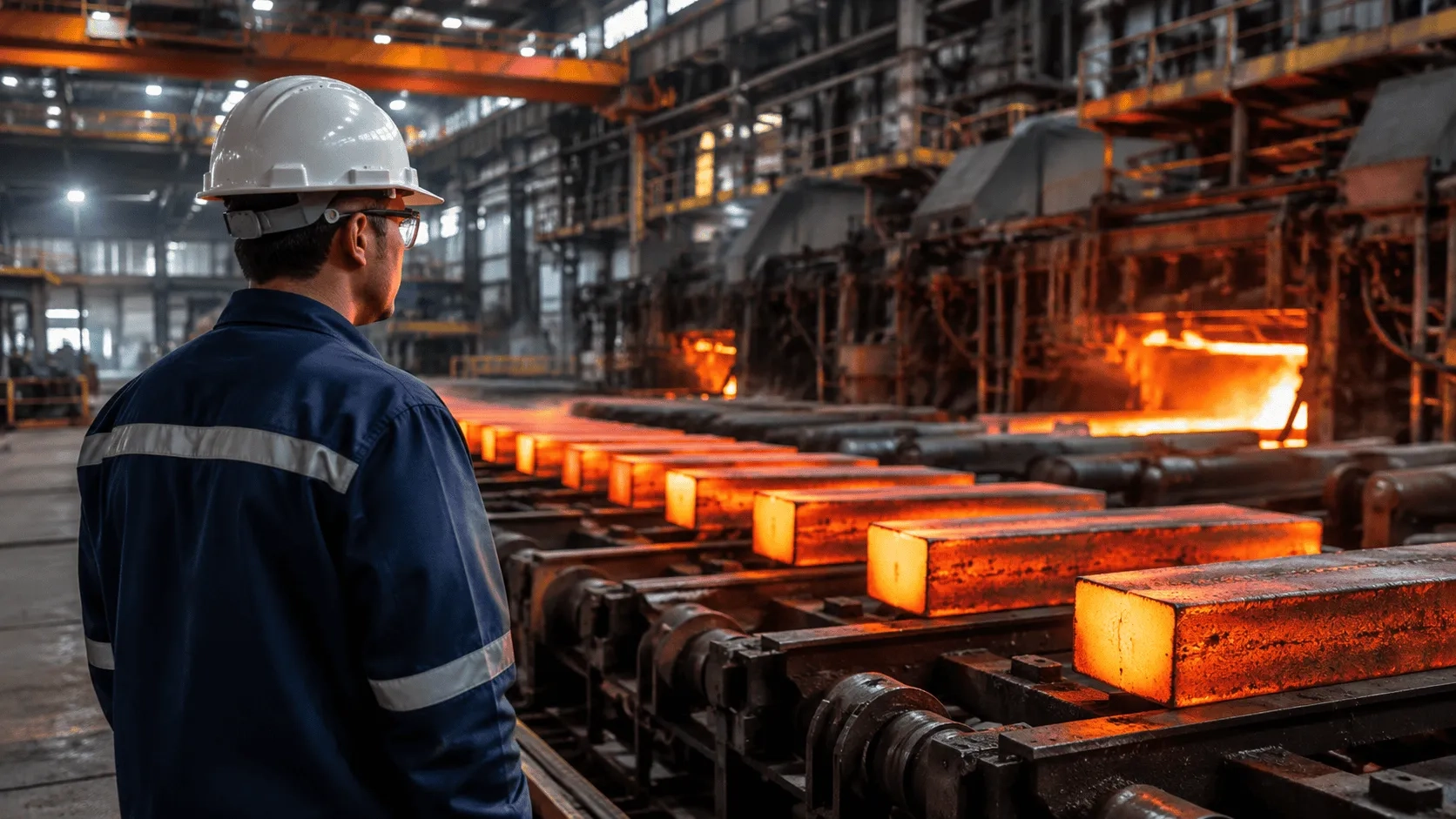
Most procurement managers treat steel billets as a commodity, but the real risk is in the chemistry and the cooling rate. If you are wondering how are steel billets made, the answer isn’t just about melting metal; it is about managing the transition from a liquid to a solid without trapping slag or creating internal voids that ruin a final draw. A slight deviation in the casting speed or a failure in the secondary cooling zone turns a high-value semi-finished product into expensive scrap before it even leaves the mill.
When you order billets, you aren’t just buying a shape. You are buying the result of a thermal battle. The goal is to move molten steel from a ladle into a solid, workable bar with a consistent grain structure. If the cooling is uneven, you get segregation, where alloying elements cluster in the center of the billet. This creates hard spots that snap your dies during cold heading or leave weak points in a structural beam. In the field, we call this “centerline segregation,” and it is the primary reason why not all billets are created equal.
The messy reality of how are steel billets made
The process starts in the Electric Arc Furnace (EAF) or a Basic Oxygen Furnace (BOF). Most modern operations lean on the EAF because it allows for better use of recycled steel scrap. We charge the furnace with scrap, apply a massive electrical current to melt it, and then refine the chemistry. This is where the “recipe” happens. If you need a specific grade, like High-Speed Steel (HSS), the precision of these additions is non-negotiable.
Once the melt is ready, it moves to the ladle metallurgy station. This is the last chance to fix the chemistry. We remove impurities like sulfur and phosphorus and add alloys like manganese or chromium. The liquid steel is then poured into a tundish, which is essentially a distribution reservoir that ensures a steady, controlled flow of metal into the casting molds. Without a tundish, the turbulence of the pour would trap air and slag, leading to non-metallic inclusions that cause cracks during later rolling.
Is continuous casting always the best option?
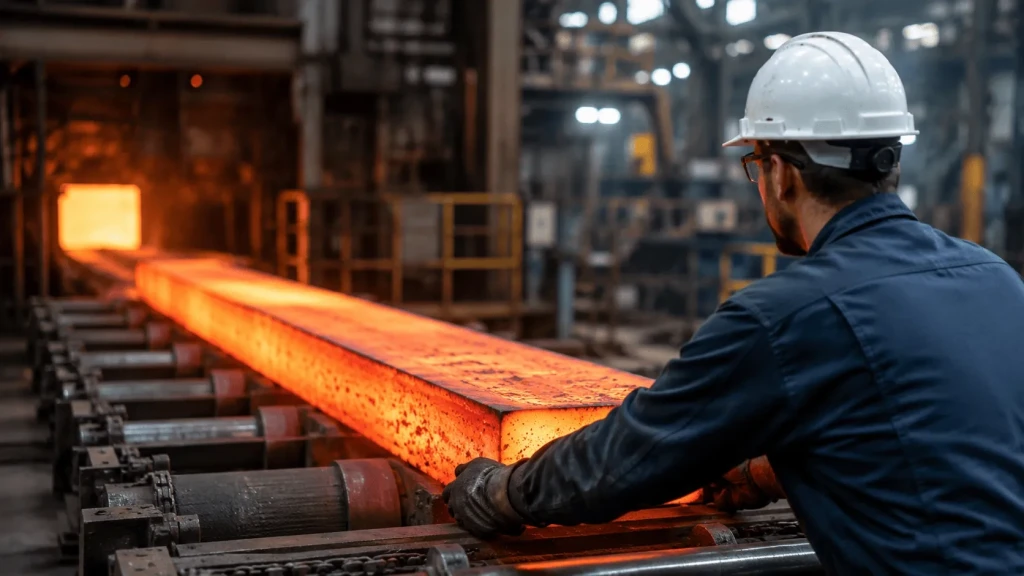
For 95% of industrial applications, yes. Continuous casting is the industry standard because it minimizes waste and keeps the heat moving. The molten steel flows through a water-cooled copper mold, where a thin “skin” of solid steel forms. This skin is just strong enough to hold the liquid core as it moves down through the machine. The steel is then hit with high-pressure water sprays in the secondary cooling zone to solidify the rest of the section. If the water pressure is too high, the billet gets thermal shock and cracks. If it is too low, the core stays liquid too long, causing the billet to bulge or “break out,” which is a catastrophic failure on the mill floor.
Can you produce quality billets from 100% scrap?
You can, but you have to be aggressive about tramp elements. Copper and tin are the enemies here. They don’t oxidize out in the furnace and they end up in the final billet, making the steel “hot short,” meaning it cracks when you try to hot-roll it. This is why the quality of the scrap feedstock is more important than the furnace technology itself. A mill that doesn’t strictly audit its scrap source will produce billets with inconsistent ductility.
The physics of the cooling curve and grain refinement
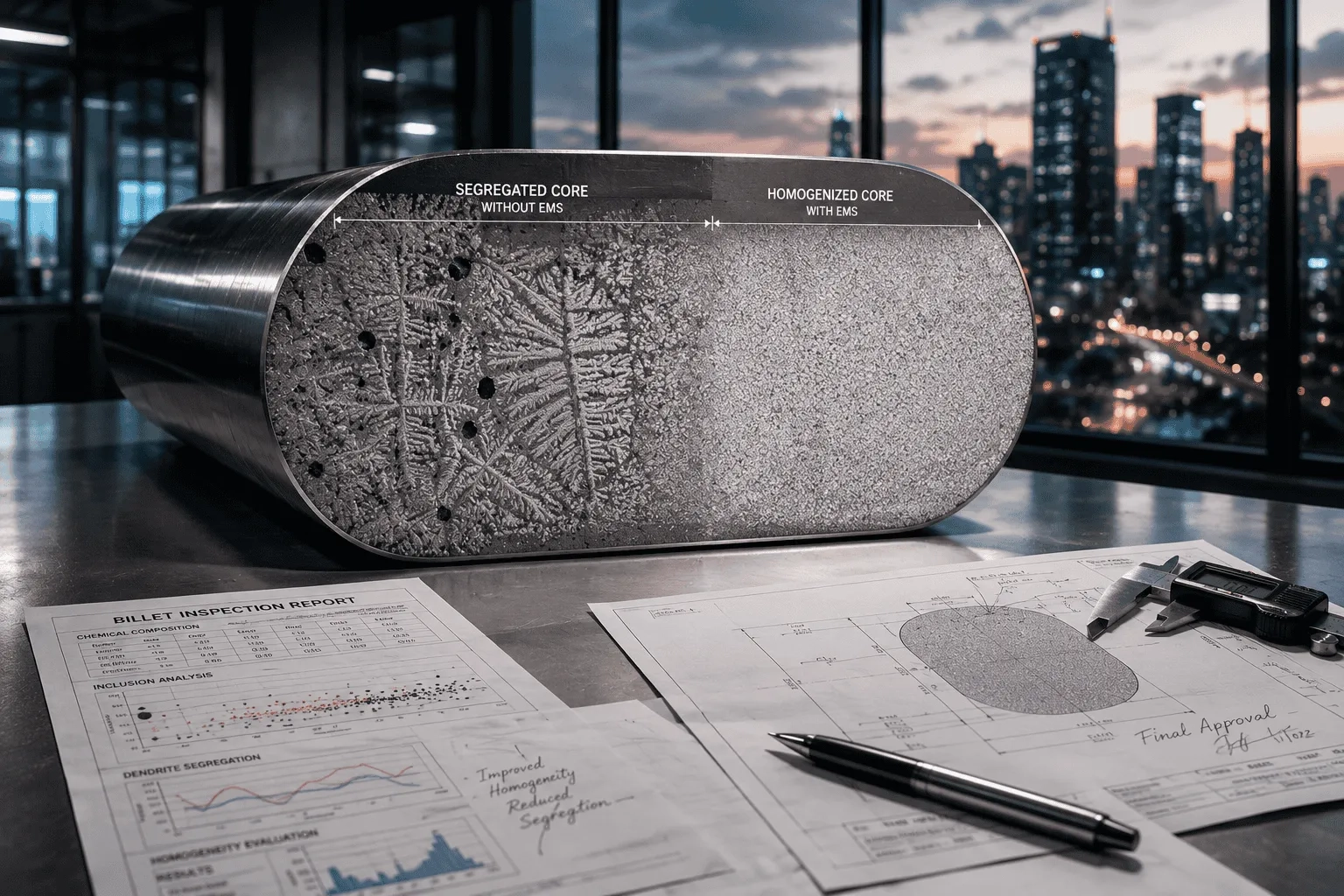
The real magic, or the real disaster, happens during the solidification phase. As the steel cools, it forms dendrites, which are tree-like crystalline structures. If the cooling is too slow, these dendrites grow too large, and the impurities get pushed to the center of the billet. This creates a “core” that behaves differently than the “shell.” When a manufacturer tries to draw that billet into a wire or roll it into a bar, the core may not deform at the same rate as the shell, leading to internal ruptures.
To fight this, some mills use electromagnetic stirring (EMS). They use magnetic fields to physically stir the liquid core of the billet as it solidifies. This breaks up the dendrites and distributes the alloys more evenly. It is a more expensive process, but it is the only way to get the kind of homogeneity required for high-stress industrial components. If you are sourcing for critical infrastructure, you should be asking your supplier if they use EMS or how they manage macro-segregation.
Cutting, Sorting, and the “Cold-Short” Risk
Once the billet is solid, it is cut to length. This is done with oxy-fuel torches or shears. The timing of the cut is critical. If you cut while the core is still too hot, the billet can warp. If you let it cool too much, you lose the energy needed for the next stage of production. Most billets are then sent to a holding furnace or stored in a way that prevents them from cooling too rapidly, which could lead to internal stress.
One overlooked issue is cold-shortness. Elevated phosphorus levels reduce the toughness of steel at lower temperatures, making it more susceptible to brittle fracture under impact or heavy mechanical loading. While properly manufactured billets are not expected to fail during normal storage or handling, excessive phosphorus can reduce performance in low-temperature service and increase the risk of cracking if the material experiences severe impact or if chemical composition is not adequately controlled. This is why mills closely monitor phosphorus levels as part of their quality control process.
How do billets differ from blooms or slabs?
It comes down to the cross-section and the intended end product. A billet is generally square and smaller, used for bars, rods, and wire. A bloom is a larger square or rectangular section used for structural I-beams or rails. A slab is wide and flat, meant for hot-rolling into sheets or plates. The production process is similar, but the cooling curves are vastly different. A slab cools much faster across its thickness than a thick bloom does, which changes how the manufacturer handles the temperature gradient.
The difference between a grade-A billet and a reject is often just a few degrees of temperature variance in the secondary cooling zone. Precision in the mill is the only way to ensure predictability in the factory.
Evaluating Billet Quality for Procurement
When you are reviewing a Mill Test Report (MTR), don’t just look at the carbon and manganese levels. Look at the phosphorus and sulfur counts. High sulfur leads to sulfide inclusions, which act as stress concentrators. If you are buying billets for forging, these inclusions are where your cracks will start. You also want to check the surface quality. Scales, pits, and “laps” (folds in the metal) are often signs of a poorly maintained mold or an unstable casting speed.
Another red flag is inconsistent dimensional tolerance. If the squareness of the billet varies, your rolling mill will experience uneven wear on the rolls, and your final product will have inconsistent diameters. A tight tolerance on the billet is a proxy for the overall discipline of the mill’s operational control. If they can’t hold the shape, they probably aren’t holding the chemistry either.
For those looking at the broader trajectory of the industry, it is worth seeing how billets are shaping the future of steel production, especially with the shift toward green steel and hydrogen-based reduction. The goal is to keep the same structural integrity while stripping out the carbon footprint of the furnace.
Ultimately, sourcing billets is about risk mitigation. You are buying a semi-finished product that hides its flaws inside the core. By the time you find a centerline pipe or a chemical drift during the final machining process, the money is already spent and the deadline is missed. This is why auditing the casting process and the quality control (QC) protocols of the mill is more valuable than chasing the lowest price per ton. You can find more about our quality standards in our quality control documentation.
If you need billets that meet these strict industrial tolerances and chemical profiles, we can help you navigate the specifications. Check out our how are steel billets made process standards and procurement options to ensure your supply chain remains stable.
To secure high-grade materials for your next project, explore our High-Speed Steel (HSS) options and alloy services.
Frequently asked questions
What is the main difference between a billet and a bar?
A billet is a semi-finished product, usually square, that serves as the raw material. A bar is a finished or semi-finished product that has been rolled or drawn from a billet into a specific shape and size for end-use.
Why does the cooling rate matter so much in billet production?
The cooling rate determines the grain size and the distribution of alloys. Too fast causes thermal cracking; too slow causes centerline segregation, where impurities concentrate in the middle of the billet.
What are “inclusions” in steel billets?
Inclusions are non-metallic particles, such as oxides or sulfides, trapped in the steel. They act as weak points and can lead to structural failure or cracking during subsequent processing.
Can billets be recycled?
Yes, steel billets are fully recyclable. In fact, most are made from recycled scrap steel processed in an Electric Arc Furnace (EAF).
What is the typical size of a steel billet?
While they vary by mill, standard industrial billets are typically square sections ranging from 100mm to 200mm per side, though custom sizes are produced for specific rolling mill requirements.